
By Natascha Hamman, Veterinary Technician and Professional Pet Travel Escort
I’m a veterinary technician, and I travel professionally with cats. Because of that, I spend a lot of time thinking about something most people don’t have to consider: What happens if a cat’s medication plan doesn’t last as long as the journey? Or what happens if no real plan is created at all?
I’ve traveled with cats who have done incredibly well with medication, and I’ve traveled with cats who have done incredibly well without it. Every cat is different.
But here’s the reality: no matter how calm, confident, or well-behaved your cat may be, air travel is stressful. They’re leaving everything familiar behind. They’re surrounded by strange sounds, smells, people, and movement, often for hours at a time.
I believe we have a responsibility to do everything reasonably possible to reduce that stress.
Medication can be one of those tools. It isn’t the only one, and it isn’t right for every cat. A secure carrier, familiar bedding, careful handling, a private TSA screening room, and good preparation all matter. But for many cats, veterinarian-prescribed medication can make an enormous difference.
When people talk about “sedating” a cat for travel, it’s important to understand what the goal actually is. Appropriate travel medication should never leave a cat unconscious or completely out of it. The goal isn’t heavy sedation. It’s reducing fear, anxiety, and stress so your cat can be calmer, more comfortable, and better equipped to handle a long travel day.
I’ve seen owners sent on their way with two gabapentin capsules for a journey that will take 20 hours door to door, with no discussion about what happens when the medication wears off, whether they can realistically give another capsule in an airport, or what to do if the first dose barely works.
Here’s the thing: once that plane takes off, it’s going to its destination.
If your cat becomes severely stressed an hour into an eight-hour flight, you can’t pull over. You can’t take them home. You can’t call your veterinarian and try something different. Your options are extremely limited.
That’s why cats deserve a thoughtful medication plan before they travel.
I’m not saying every cat needs medication, and I can’t tell you which medication is right for yours. Medication recommendations should always come from a veterinarian who understands your cat’s medical history, health conditions, and individual needs.
But your cat does not have to simply endure hours of fear and anxiety because no one took the time to explore the options.
When considering medication for cats flying, it’s important to understand that safe, veterinarian-prescribed medications can make an enormous difference for many cats during travel. But finding the right medication is only part of the equation. You also need to know whether it works for your cat, how long its effects are expected to last, whether you can realistically administer it during transit, what other medications your veterinarian may recommend if one medication alone isn’t enough, and what the plan is if your journey takes longer than expected.
Sometimes, getting those answers requires you to advocate for your cat.
That doesn’t mean telling your veterinarian how to practice medicine. It means asking questions, explaining the realities of your complete journey, speaking up when the plan doesn’t seem to account for a 20-hour travel day, and going back to your veterinarian if an at-home medication trial doesn’t work the way you hoped.
Being prescribed medication is not the same thing as having a travel medication plan.
My goal with this article is to help you understand some of the options you can discuss with your veterinarian, the questions I believe every cat parent should ask before traveling, and why the time to find out whether your plan works is at home—not at 35,000 feet.
DOWNLOAD OUR GUIDE
Free Cat Travel Medication Planner
Preparing to fly with your cat? Download our free Cat Travel Medication Planner to map your complete journey, prepare for your veterinary appointment, record your cat’s at-home medication trial, and create a plan for delays and disruptions.
Enter your information below for a free download.
Disclosure: This article contains affiliate links to some of the products we use and recommend when traveling with pets. If you make a purchase through one of these links, Cabin Companions may earn a small commission at no additional cost to you.
HOW LONG IS YOUR TRAVEL, REALLY?
“My Cat Is Taking an Eight-Hour Flight” Doesn’t Tell the Whole Story
One of the most important things you can do when talking to your veterinarian about travel medication is bring them your complete itinerary.
And I mean the complete itinerary.
I often hear people say, “My cat is taking an eight-hour flight.” But that might start with a two-hour drive to the airport. For an international flight, you may arrive three hours before departure. Then there’s check-in, security, boarding, the flight itself, immigration and customs, and another drive to your final destination.
Suddenly, your cat isn’t traveling for eight hours. They’re traveling for 16 or 18.
Add a connection, flight delay, or missed connection, and that travel day can become significantly longer.
This matters when you’re creating a medication plan.
Depending on your cat and your veterinarian’s recommendations, that plan may even begin before travel day. Some veterinarians may recommend starting medication the evening before or administering a dose well before you leave home. That’s another reason your veterinarian needs to understand the complete journey—and why you need clear instructions about exactly when the plan should begin.
Your veterinarian needs to know when your cat will leave home, how long the entire journey is expected to take, whether you have connections, and what could happen if the trip takes longer than planned.
If your cat’s medication is expected to help for only part of the journey, what happens next? Can another dose be given? If so, when? How will you administer it? What if the first medication doesn’t provide enough anxiety relief? Has your veterinarian recommended another medication that can safely be used alongside it?
These are questions you want answered before you leave home.
I’ve traveled internationally with cats on journeys that lasted well over 20 hours door to door. The length of the flight is rarely the number I care about most. I want to know how long that cat will actually be in transit and what options I have if the journey doesn’t go according to plan.
So when you make that appointment with your veterinarian, don’t just say, “My cat is going on an eight-hour flight.”
Bring the itinerary. Explain the entire journey. Ask your veterinarian to help you create a plan that gets your cat comfortably to the destination—not just through the first flight.
KNOW YOUR GOAL
The Goal Isn’t Sedation. It’s Reducing Fear, Anxiety, and Stress.
When people ask me about medication for flying with a cat, they often use the word “sedation.”
“Should I sedate my cat for the flight?”
“Is it safe to sedate a cat for travel?”
“Will my cat be completely out of it?”
I understand why people ask these questions, but I think it creates a false choice. Your options aren’t limited to putting your cat on a plane completely unmedicated or giving them enough medication that they’re heavily sedated and unaware of what’s happening.
That isn’t the goal.
The goal is to reduce fear, anxiety, and stress.
There’s also an important safety reason for this distinction. Veterinary and airline-industry guidance generally advises against heavily sedating or tranquilizing animals for air travel. These drugs can interfere with an animal’s ability to respond normally to the stresses of transportation and may increase the risk of heart or respiratory problems. Airlines may also refuse to transport an animal that appears sedated or tranquilized.
That is different from working with your veterinarian on an appropriate medication plan intended to reduce fear and anxiety while allowing your cat to remain responsive.
We are not advocating for knocking cats out for a flight. We are advocating for taking their fear and anxiety seriously.
A cat who responds well to veterinarian-prescribed travel medication may still be awake and aware of their surroundings. They may still interact with you, eat a Churu during a layover, change positions in their carrier, and let you know exactly how they feel about the situation.
They’re still your cat.
They’re just less afraid.
Medication also isn’t a replacement for everything else we do to make travel safer and more comfortable. When I travel with a cat, I want a secure carrier. I use zipper locks to prevent escapes. I want the cat wearing a properly fitted harness and leash, and I request a private room for TSA screening whenever possible. I use familiar bedding, minimize unnecessary handling, and do everything I reasonably can to reduce stress throughout the journey.
Medication, when appropriate, is another tool in that toolbox.
I don’t believe we should medicate every cat simply because they’re getting on an airplane. I’ve traveled with plenty of cats who have done beautifully without it.
But I also don’t believe allowing a severely anxious cat to remain terrified for hours is automatically the more humane choice simply because medication wasn’t used.
If safe, veterinarian-prescribed medication can help your cat experience less fear and anxiety during a journey they have no choice but to take, it’s worth having that conversation with your veterinarian.
The goal isn’t to make your cat unaware of the journey. It’s to make the journey less frightening.
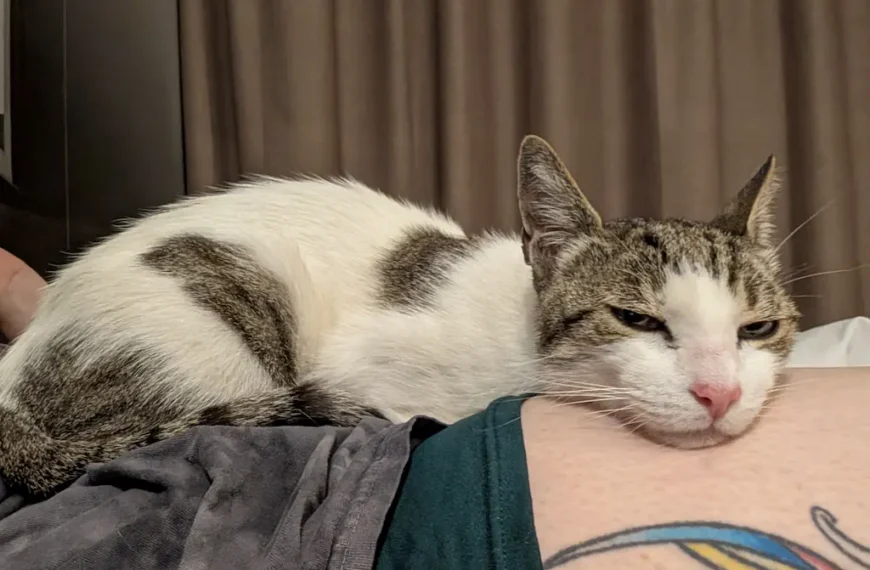
PRACTICE MAKES PURRRFECT
Trial the Medication Before Travel. Every Time.
Please do not let travel day be the first time you give your cat a new medication.
Every cat responds differently. A medication that works beautifully for one cat may have very little effect on another. Some cats may become more sedated than expected. Others may experience vomiting or other side effects. Occasionally, a medication intended to reduce anxiety can have the opposite effect and cause increased agitation.
You want to find that out at home—not at 35,000 feet.
Trialing medication before travel gives you the opportunity to see how your individual cat responds. How long does it take before you notice an effect? Does your cat seem calmer and less anxious? Are they excessively sedated? Does the medication seem to have very little effect? How long do the noticeable effects last?
And just as importantly: can you actually give it to them?
A medication can be incredibly effective, but that doesn’t help if your cat refuses to take it or administering it becomes a wrestling match.
I also want to make something very clear: a medication trial that doesn’t go well is not a failure. It’s useful information.
If your veterinarian prescribes gabapentin and your cat barely responds to it, that doesn’t necessarily mean medication isn’t an option. Go back to your veterinarian and tell them exactly what happened.
How much medication did you give, as prescribed? What time did you give it? How long did you wait? What changes did you notice? How long did those changes last? Did you have difficulty administering it?
The more specific you are, the better equipped your veterinarian is to help adjust the plan. That might mean changing the timing or formulation, adjusting the dose when medically appropriate, trying a different medication, or discussing whether another medication can safely be used alongside it.
And if possible, talk to your veterinarian about whether a more realistic practice run makes sense after you know your cat tolerates the medication safely.
A cat relaxing peacefully on the couch after taking medication doesn’t necessarily tell you everything about how they’ll respond to the stress of travel. Depending on your cat and your veterinarian’s recommendations, a practice run involving the carrier or a short car ride may give you additional useful information.
The goal isn’t to hope the medication works.
The goal is to know as much as reasonably possible before the real journey begins.
THE GO-TO MED
Gabapentin: The Medication Most Cat Parents Are Offered First
If you talk to your veterinarian about medication for travel anxiety, there’s a good chance gabapentin will be the first medication they recommend.
There are good reasons for that. Gabapentin has been used in cats for years, veterinarians are very familiar with it, it’s widely available and inexpensive, and many cats respond incredibly well to it.
I’ve traveled with plenty of cats who have done beautifully on gabapentin.
But I’ve also traveled with cats who barely responded to it at all.
That’s one of the most important things to understand about gabapentin: the response can vary significantly from one cat to another. One cat may become calm and relaxed, another may become very sleepy or uncoordinated, and another may seem almost completely unaffected. In rare cases, cats may experience paradoxical agitation and become more restless or excited instead of calmer.
This is exactly why I believe so strongly in trialing medication before travel.
It’s also why I want cat parents to understand that being handed a few gabapentin capsules doesn’t necessarily mean you have a complete medication plan.
How long is your entire journey? How long does your veterinarian expect the effects to last? If the medication wears off before you reach your destination, can another dose be given? If so, when? What happens if your at-home trial shows that gabapentin alone doesn’t adequately reduce your cat’s anxiety?
You need answers before you leave home.
There’s another issue with gabapentin that I see all the time: the formulation.
Gabapentin is commonly prescribed in capsules, and for some cats and their owners, that works perfectly well. But giving a capsule at home is very different from trying to give one to a frightened cat in the middle of an airport or during a long layover.
I cannot emphasize this enough: it doesn’t matter how effective a medication is if you can’t actually get it into your cat.
Gabapentin is available in capsules and compounded oral liquids. Transdermal preparations also exist, but absorption through the skin can be inconsistent, and the evidence does not support treating transdermal gabapentin as an equivalent substitute when reliable, timely anxiety relief is needed for travel.
There’s another practical issue with gabapentin: its taste can lead to drooling, foaming, or resistance in some cats. Don’t assume your cat will eat it hidden in food or a treat—especially when they’re already stressed.
Talk to your veterinarian about which formulation is appropriate for your cat and explain the practical realities of your journey. If your cat may need additional medication after ten hours of travel, you need a plan for how you’re actually going to give it.
And remember: trialing the medication should include trialing the formulation.
Can you administer it safely and reliably? How does your cat react when you give it? Is this something you can realistically do again after ten hours of travel?
These practical questions matter.
I want to be clear that I’m not against gabapentin. Not even a little bit. It can be incredibly useful, and I’ve seen it make travel significantly more comfortable for many cats.
What I’m against is treating gabapentin as the end of the conversation.
If your cat does well with it, great. Work with your veterinarian to make sure you have a plan for the entire journey.
But if your cat barely responds, if the effects don’t last long enough, or if administering the prescribed formulation is incredibly difficult, go back to your veterinarian and keep the conversation going.
Gabapentin is a medication option. It is not the only medication option.
ANOTHER, NEWER OPTION
Pregabalin and Bonqat: An Option More Cat Parents Should Know About
If your cat barely responded to gabapentin, I want you to know something important: that does not necessarily mean you’re out of options.
Pregabalin is a medication I wish more cat parents knew to ask their veterinarians about.
Pregabalin is closely related to gabapentin, but it is a different medication with its own dosing, pharmacology, and evidence in cats. Most importantly for this discussion, pregabalin oral solution has been specifically studied and FDA-approved for acute fear and anxiety associated with transportation and veterinary visits.
There’s a pregabalin oral solution made specifically for cats called Bonqat.
In other words, this is a medication made for exactly the kind of situation we’re talking about.
I’ve seen cats who barely responded to gabapentin do incredibly well with pregabalin. That doesn’t mean pregabalin is automatically better or right for every cat. It means cats are individuals, and an inadequate response to one medication shouldn’t automatically end the conversation.
Bonqat also has some practical advantages for travel.
First, it’s a liquid. As I mentioned earlier, the best medication plan in the world isn’t very useful if you can’t actually give the medication to your cat. Administering a measured amount of liquid can be much more realistic during a long travel day than trying to give a stressed cat a capsule in an airport.
Pregabalin is also less bitter than gabapentin, which means many cats may tolerate it better when given orally. Some may even take it mixed with a small amount of food—although, as with any administration plan, I want to know that works for your individual cat before travel day.
There’s another practical consideration for travelers: storage. According to the prescribing information, Bonqat should be refrigerated and used within six months after opening. During that six-month period, however, an opened bottle may remain at or below 77°F (25°C) for up to one month.
Of course, pregabalin has limitations too. It can be more expensive than gabapentin, and because Bonqat is a newer option, some veterinarians may be less familiar with it.
That’s where advocating for your cat comes in.
If your cat barely responded to gabapentin, you don’t need to walk into your veterinarian’s office and demand pregabalin.
You can simply ask:
“My cat didn’t respond well to gabapentin. Is pregabalin or Bonqat an option we should consider?”
Maybe your veterinarian says yes. Maybe there’s a medical reason it isn’t appropriate. Maybe they recommend an entirely different approach.
That decision belongs to you and your veterinarian.
But you can’t have a conversation about an option you don’t know exists.
If the first medication you try doesn’t give your cat adequate relief, don’t assume your only choices are to give up on medication or put your cat on the plane and hope for the best. Go back to your veterinarian, explain what happened, and ask what other options are available.
FOR LONGER FLIGHTS, HIGHER STRESS, AND MORE
Trazodone: When One Medication May Not Be Enough
Sometimes, finding the right medication plan isn’t about finding one medication that does everything.
It’s about finding the right combination of tools for your individual cat.
Trazodone is another medication veterinarians may prescribe to help reduce fear and anxiety during stressful events, including travel and veterinary visits. It may be prescribed on its own, but it can also be used alongside other medications, such as gabapentin, when a veterinarian determines that combination is appropriate.
If your cat safely tolerates gabapentin but your at-home trial shows they’re still extremely anxious, that doesn’t necessarily mean you have to throw out the entire plan and start over.
It may mean you need to go back to your veterinarian and say:
“My cat tolerated the gabapentin, but they were still very anxious. Are there other medications that can safely be used alongside it?”
For some cats, a veterinarian may recommend adding trazodone to the plan. Gabapentin and trazodone work differently in the body, and veterinary protocols may use them together when one medication alone doesn’t provide adequate relief from fear and anxiety.
Again, this is not something you should experiment with on your own.
Combining medications makes trialing the complete plan before travel even more important. You need to know how your cat responds to the medications together, whether they experience excessive sedation or other side effects, how long the noticeable effects last, and whether the combination actually provides better anxiety relief.
Trazodone, like any medication, isn’t right for every cat. Individual responses vary, and some cats may experience side effects such as gastrointestinal upset, excessive sedation, or paradoxical agitation. Your veterinarian also needs to consider your cat’s health history and any other medications they’re taking.
But the larger point is this: you don’t necessarily have to give up on a medication that helped a little just because it didn’t help enough.
Tell your veterinarian what you observed during the trial. Explain what improved and what didn’t. Then ask whether adjusting the plan, trying another medication, or safely combining medications might be appropriate.
Sometimes the answer will be no. There may be a medical reason your veterinarian doesn’t recommend a particular medication or combination, and that’s important information too.
But ask the question.
Advocating for your cat doesn’t always mean asking for a different medication. Sometimes it means asking whether the medication that helped a little can safely be part of a better plan.
PLANS CAN BE POWERFUL - BUT THEY HAVE TO BE FOLLOWED
A Medication Plan Is Only Useful If You Can Actually Follow It
When I ask whether you can administer your cat’s medication during travel, I don’t just mean, “Can you give your cat a pill?”
I mean: can you give your cat that medication safely after 12 hours of travel, in an unfamiliar airport, without creating an escape risk or making an already stressful situation significantly worse?
Giving medication at home is one thing. You’re in a familiar environment. You have all your supplies. If your cat runs under the bed, you know where they are.
None of that is true in an airport.
This is why medication administration has to be part of the travel plan—not something you figure out along the way.
Start with the formulation. Is your cat easy to pill? Would a liquid be easier? What formulations are appropriate and available for the medication your veterinarian has prescribed?
Then think about the tools you may need.
A pill popper can make administering tablets or capsules easier and help keep your fingers away from a stressed cat’s mouth. A medication syringe should be packed and easily accessible if you’re traveling with liquid medication. Churu or another high-value treat may help disguise certain medications or encourage your cat to eat or swallow after receiving them, depending on your veterinarian’s instructions.
Whatever method you plan to use, practice it before travel.
Please don’t buy a pill popper, throw it in your carry-on, and assume you’ll figure it out somewhere over the Atlantic.
Make sure you know how to use it. Make sure you know how your cat reacts to it. If you’re traveling with liquid medication, practice using the syringe. If you’re hoping your cat will take medication hidden in Churu, find out whether that actually works before you leave home.
Hint: it rarely works.
And think carefully about where you’ll administer additional medication during the journey.
One of my biggest priorities when traveling with a cat is avoiding unnecessary escape risks. I don’t want to completely remove a cat from their carrier in the middle of an airport just to give medication.
Depending on the cat, carrier, and formulation, you may be able to safely administer medication through a small opening while keeping the cat contained. If that isn’t possible, find a secure private room before opening the carrier. This is another reason I’m such a strong advocate for private TSA screening rooms when traveling with cats.
Before you open that carrier, have everything ready.
The medication should be measured or prepared according to your veterinarian’s instructions. Your pill popper or syringe should be within reach. Have treats, wipes, and anything else you might need ready to go.
The last thing you want is an open carrier, a stressed cat, and the sudden realization that the medication syringe is buried at the bottom of your luggage.
And speaking of luggage: never pack medication your cat may need during the journey in checked baggage.
Keep the medication, administration supplies, and your veterinarian’s instructions easily accessible throughout the trip.
You should also talk to your veterinarian about delays and disruptions.
Flights get delayed. Connections get missed. Weather happens. An 18-hour journey can become a 24-hour journey very quickly.
Ask your veterinarian what you should do if your trip lasts significantly longer than expected. If additional medication can safely be administered, you need clear instructions about when and how to give it. And, when medically appropriate, you need enough medication available to follow that plan.
Don’t wait until you’re stranded overnight in an airport to realize you’ve run out of options.
The best medication plan isn’t just about choosing a medication that works. It’s about finding a veterinarian-approved plan that works for your cat, lasts for the realities of your journey, and can actually be administered safely when and where your cat needs it.
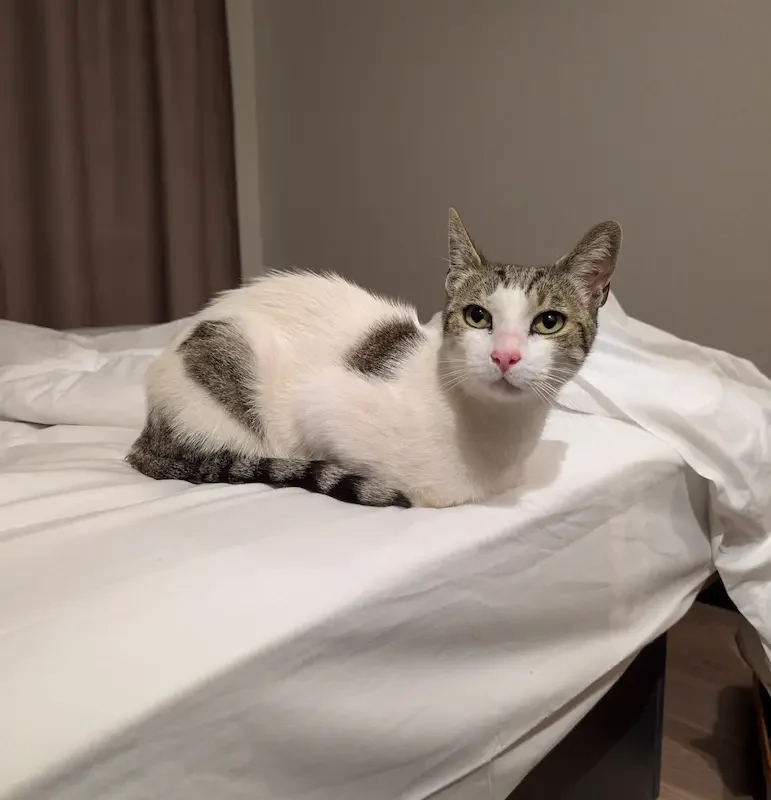
DON'T GET INTIMIDATED - HAVE A CONVERSATION
What If Your Veterinarian Doesn’t Seem Comfortable With Your Medication Plan?
This is where I’m going to ask you to advocate for your cat.
Your veterinarian may have completely legitimate medical reasons for not recommending a particular medication, dose, combination, or formulation. They know your cat’s medical history and health conditions, and medication decisions ultimately belong to you and your veterinarian.
But you are allowed to ask questions.
If your veterinarian gives you two gabapentin capsules for a 24-hour journey, you’re allowed to ask how those two capsules are supposed to cover the entire trip.
If you trial the medication exactly as prescribed and your cat is still extremely anxious, you’re allowed to go back and say so.
If there is absolutely no way you’re going to get a capsule into your cat after 12 hours of travel, you’re allowed to ask about a different formulation.
You’re allowed to ask about pregabalin. You’re allowed to ask about trazodone. You’re allowed to ask whether medications can safely be used together. You’re allowed to ask what happens if your flight is delayed and the medication wears off.
And you should expect real answers.
There is a difference between a veterinarian saying, “That medication isn’t safe or appropriate for your cat, and here’s why,” and having your concerns about your cat’s fear and anxiety dismissed without exploring reasonable alternatives.
Sometimes, your veterinarian may simply not have much experience creating medication plans for cats traveling long distances.
That doesn’t make them a bad veterinarian.
I’ve worked in veterinary medicine for years, and no veterinarian can specialize in everything. The medical needs of a cat traveling internationally for 20 or 30 hours are not something every practice deals with regularly.
If your veterinarian doesn’t feel comfortable creating a more comprehensive medication plan, it is completely reasonable to seek a second opinion.
Depending on where you live, telemedicine may also help you consult with a veterinarian who has more experience in feline behavior or travel-related anxiety. However, prescribing rules vary by state, and many medications used for feline travel anxiety require an established veterinarian-client-patient relationship that may include an in-person examination. An online consultation may therefore supplement an existing veterinary relationship rather than replace an in-person appointment.
The point is not to keep asking veterinarians until you find someone who will prescribe whatever medication you want.
The point is to find a veterinary professional who will listen to your concerns, consider your cat’s individual health and behavior, understand the realities of your journey, and work with you to develop the safest and most practical plan possible.
Bring your complete itinerary. Bring the results of your medication trial. Explain exactly how your cat responded. Be honest about what you can and cannot realistically administer during travel. Ask questions. And if you don’t understand the answer, ask again.
Advocating for your cat doesn’t mean demanding a particular prescription. It means refusing to accept “they’ll just have to get through it” as a complete plan when your cat is likely to experience significant fear and anxiety during a journey they cannot escape.
A Q&A FOR APPOINTMENT DAY
Questions to Ask Your Veterinarian Before Traveling
There’s a lot to think about when creating a medication plan for your cat, and your veterinary appointment probably isn’t the time to rely on memory.
Before your appointment, write down your complete door-to-door itinerary, including ground transportation, airport arrival time, flights, connections, customs and immigration, and transportation to your final destination.
Then bring your questions:
- Based on my cat’s health and medical history, what medications are appropriate for managing fear and anxiety during travel?
- When should the medication plan begin? Should any medication be given the night before or well before we leave home?
- How long before travel should I administer each medication?
- How long should I expect the effects to last?
- What should I look for during our at-home medication trial?
- What should I do if the medication has very little effect?
- What should I do if my cat becomes excessively sedated, agitated, or experiences other side effects?
- If one medication doesn’t provide enough relief, are there other medications that can safely be used alongside it?
- What formulations are available, and which can I most safely and realistically administer during travel?
- If the medication wears off before we reach our destination, can another dose be given? If so, exactly when and under what circumstances?
- Are there warning signs that would mean I should not give another dose?
- What should I do if our flight is delayed, we miss a connection, or the journey takes much longer than expected?
- Do I have enough medication to cover the complete journey and reasonable delays?
- How should I store and transport the medication during the trip?
- Is there anything else about my cat’s health or medical history that I should consider before we travel?
Don’t be afraid to take notes during the appointment. Ask your veterinarian to clarify anything you don’t understand, especially instructions about timing, additional doses, combining medications, and what to do if the journey doesn’t go according to plan.
And once you’ve trialed the medication at home, write down what happened.
When did you administer it? How difficult was it to give? When did you first notice an effect? What changed? Did your cat seem less anxious? Were they excessively sleepy or uncoordinated? Did you notice side effects? How long did the noticeable effects last?
Your veterinarian can do much more with specific information than, “I tried it, and I don’t think it worked.”
DOWNLOAD OUR GUIDE
Don’t Try to Keep All of This in Your Head
We created a free Cat Travel Medication Planner to help you prepare for your veterinary appointment and build a more complete travel plan.
Use it to map out your cat’s complete door-to-door journey, prepare questions for your veterinarian, record the results of your at-home medication trial, write down your veterinarian’s instructions, and make sure you have a plan for delays and disruptions.
Bring it to your veterinary appointment. Use it during your at-home trial. Keep the completed plan with your cat’s travel documents.
Because when you’re halfway through a long travel day with a stressed cat, a delayed flight, and another eight hours before you reach your destination, you don’t want to be trying to remember what your veterinarian told you three weeks ago.
You want a plan.
Enter your information below for a free download.
BUILD A BETTER TRAVEL DAY
Give Your Cat Every Reasonable Tool in the Toolbox
When I travel with a cat, I want every reasonable tool available to me.
I hope I won’t need the extra medication my veterinarian has prescribed for delays. I hope the medication plan works exactly as expected. I hope the flight leaves on time, the connection goes smoothly, and the cat in my care spends most of the journey comfortably resting in their carrier.
But hope isn’t a travel plan.
Once that plane takes off, we’re going to our destination. My responsibility is to do everything reasonably possible to keep that cat safe and comfortable until we get there.
That means bringing the right supplies, using a secure carrier, preventing escape risks, minimizing unnecessary stress, and being prepared when the journey doesn’t go according to plan.
And, when appropriate for that individual cat, it means having a thoughtful, veterinarian-approved medication plan.
Advocate for your cat.
Bring your complete itinerary to your veterinarian. Trial the medication before you travel. Pay attention to how your cat responds. Go back to your veterinarian if the first plan doesn’t work. Ask about other options. Make sure you can administer the medication during transit. Know what to do if your journey takes longer than expected.
You’re not trying to tell your veterinarian how to practice medicine. You’re making sure they have the information they need to help you build a plan that works in the real world.
Your cat has no control over where they’re going, how long the journey takes, or what happens along the way.
We do.
The least we can do is give them every reasonable tool we have to make that journey safer, more comfortable, and less frightening.
THE STUFF YOU WANT TO KNOW
Frequently Asked Questions About Cat Travel Medications
Should I sedate my cat for air travel?
The goal of a travel medication plan should not be to heavily sedate your cat or leave them unconscious or unresponsive. Instead, veterinarian-prescribed medications may be used to reduce fear, anxiety, and stress while allowing your cat to remain safely responsive.
Veterinary and airline-industry guidance generally discourages heavily sedating or tranquilizing animals for air travel. Talk to your veterinarian about whether anxiety-reducing medication is appropriate for your cat and how to safely make the journey less frightening.
Is gabapentin safe for cats flying on airplanes?
Gabapentin is commonly prescribed by veterinarians to reduce fear, anxiety, and stress in cats during transportation and veterinary visits. Many cats respond well to it, but individual responses can vary significantly.
Your veterinarian should determine whether gabapentin is appropriate for your cat based on their health and medical history. Any medication should be trialed at home before travel so you know how your cat responds, how long the effects last, and whether you can realistically administer it during the journey.
What if gabapentin doesn’t work for my cat?
An inadequate response to gabapentin does not necessarily mean medication isn’t an option for your cat. Tell your veterinarian exactly what happened during the at-home trial, including the dose given as prescribed, when you administered it, what effects you observed, and how long those effects lasted.
Your veterinarian may recommend adjusting the medication plan, discussing another option such as pregabalin, or determining whether another medication can safely be used alongside it. Never change doses or combine medications without veterinary direction.
Should I trial my cat’s medication before flying?
Yes. Travel day should not be the first time your cat receives a new medication whenever an at-home trial is possible.
A medication trial allows you to observe how your cat responds, how long the medication takes to have a noticeable effect, how long those effects last, whether side effects occur, and whether you can realistically administer the prescribed formulation.
If the trial doesn’t go as expected, contact your veterinarian before traveling. A medication trial that doesn’t work is not a failure—it’s valuable information that can help your veterinarian create a better plan.
Can cats take more than one anxiety medication for travel?
In some cases, veterinarians may prescribe more than one medication when a single medication does not adequately reduce a cat’s fear and anxiety. For example, trazodone may sometimes be used alongside gabapentin when a veterinarian determines the combination is appropriate for an individual cat.
Combining medications should only be done under veterinary direction, and the complete medication plan should be trialed before travel whenever possible. Your veterinarian should provide clear instructions about timing, dosing, possible side effects, and what to do if your journey takes longer than expected.
Meet the Author
About Natascha Hamman
Natascha Hamman is a Vet Tech with Cabin Companions. She combines years of feline veterinary experience with firsthand knowledge of domestic and international pet travel, personally accompanying cats and dogs throughout their journeys and helping keep them safe and comfortable along the way.