
What Happens to Pets During an FAA Ground Stop?

On November 13, 2026, an air traffic control communications failure prompted the FAA to issue a nationwide ground stop. The stop lasted about four hours, and delays continued after departures resumed. Some flights were diverted or canceled. A ground stop holds affected flights at their departure airports.
Thankfully, major nationwide ground stops are extraordinarily rare. Previous examples include September 11, 2001, and the FAA computer-system failure in January 2023. Smaller ground stops affecting individual airports happen more routinely, often because of weather, congestion, or equipment problems.
But whether a ground stop lasts 30 minutes or several hours, one thing is certain: nobody enjoys being stuck on an airplane without knowing when they'll be moving again.
For passengers, a prolonged disruption might mean hours waiting at the gate, an unexpected overnight stay, or an entirely different itinerary.
But what happens when you're traveling with a pet?
What if your cat is already settled into their carrier beneath your seat? Or, perhaps more concerning, what happens if your dog is traveling in the aircraft hold and the plane can't take off or is stuck on the tarmac waiting for a gate?
You might understand why your flight is delayed, even if you don't know when you'll reach your destination. Your pet doesn't have that luxury. You can't explain what an FAA ground stop is, why the plane isn't moving, or when things will return to normal.
That's why preparation matters so much.
At Cabin Companions, we've encountered our share of unexpected delays and overnight disruptions. While we can't control an FAA ground stop, we can prepare for the complications it creates and advocate for the pets traveling with us.
Here's what you should know about how pets are cared for during a ground stop, whether they're traveling in the passenger cabin or the aircraft hold.
If Your Pet Is Traveling With Cabin Companions in the Passenger Cabin
We spend a lot of time on airplanes. And if there's one thing that experience has taught us, it's that delays are part of air travel.
Some last 20 minutes. Others turn into several hours. Occasionally, a disruption means finding a pet-friendly hotel and starting again the next morning.
We can't predict when an unexpected delay will happen, and we certainly can't do anything about an FAA ground stop.
What we can do is prepare for it.
Whenever we accompany a cat or dog in the passenger cabin, we're carrying supplies that help us manage an unexpectedly long travel day.
Depending on the individual pet, those supplies include:
- Extra food and treats, including Churu for our feline travelers
- Water and appropriate ways to offer it
- Absorbent pee pads and replacement carrier bedding
- Cleanup supplies, wipes, and waste bags
- Prescribed medications, when appropriate, with a veterinarian-approved plan for delays
- Carrier-security supplies, identification, and other travel essentials
Those aren't things we pack because we expect something to go wrong. They're things we carry because we know plans can change.
A cat who has been resting comfortably in their carrier for several hours may need a fresh absorbent pad. A dog may need an opportunity for a bathroom break if we're able to return to the terminal. A nervous traveler may benefit from a familiar treat, a reassuring voice, and a calm, consistent person beside them.
Extended delays may require additional medication when specifically authorized by the pet's veterinarian. That's one reason we're such strong advocates for developing a complete cat travel medication plan before departure.
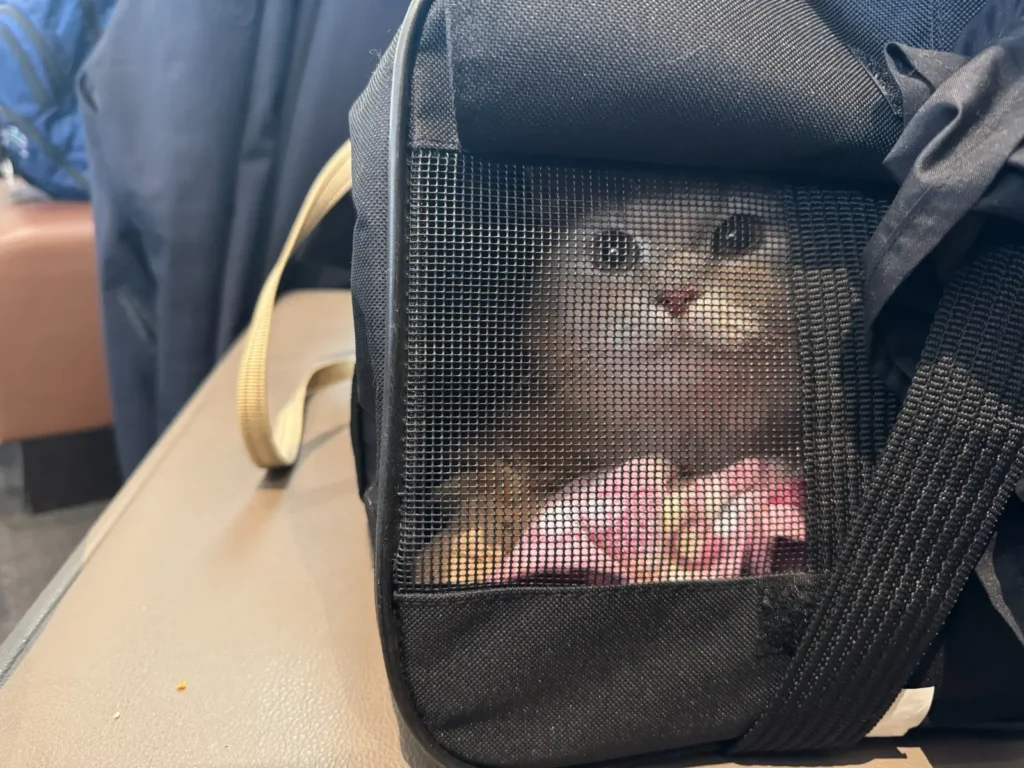
Sometimes the Most Important Tool Is Our Voice
There's something else we bring that doesn't fit into a travel bag: the ability to advocate for the animal in our care and the experience of knowing how to make necessary travel changes on the fly.
If a delay is becoming unusually long, we don't sit quietly and assume everything will work itself out.
We communicate with the flight attendants and airline staff. We ask about the expected duration, whether returning to the gate is possible, and what arrangements can be made if the flight is canceled or we're required to spend the night somewhere unexpected.
If a pet has an urgent health or welfare concern, we'll make sure the crew knows. We'll also keep you and the Cabin Companions team on the ground informed and reach out for veterinary assistance if needed.
That doesn't mean we get to make decisions for the airline. We don't.
But it does mean there's an experienced person responsible for that pet, paying attention, asking questions, and making sure their needs aren't forgotten. Behind that person is a team working on your backup plan if needed.
And when you're stuck on an airplane, having someone who knows what to ask and what to do next makes a big difference.
What If Your Dog or Cat Is Traveling in the Aircraft Hold?
This is, understandably, the scenario that makes many pet parents most nervous.
If your dog is in a crate beneath the passenger cabin and the aircraft suddenly can't take off, you can't simply walk downstairs and check on them.
And unlike a pet traveling in the cabin, you can't personally offer a treat, refresh their bedding, or reassure them during the wait.
The good news is that aircraft used to transport live animals must have appropriate accommodations for them. Under applicable USDA animal-transport requirements, the areas used to transport dogs and cats must provide sufficient ventilation and be heated or cooled as necessary to protect the animals' health and welfare. The rules also address pressurization while airborne, with an exception for flights below 8,000 feet.
But there's an important distinction between how an aircraft hold operates in flight and what happens when an aircraft is parked on the ground.
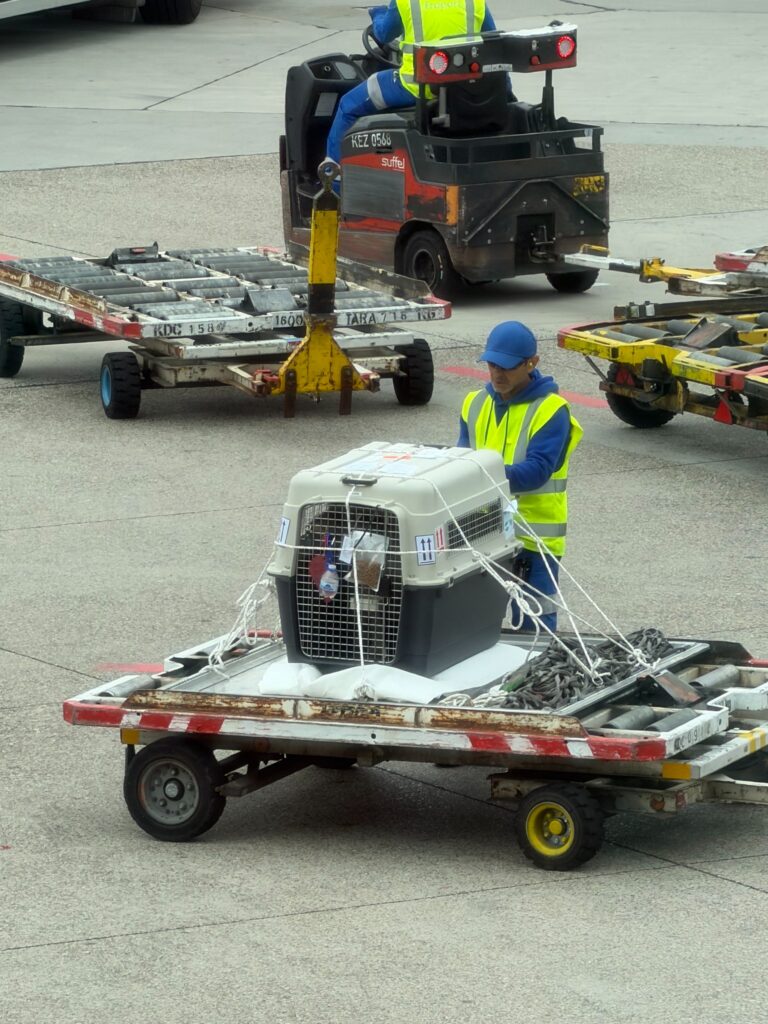
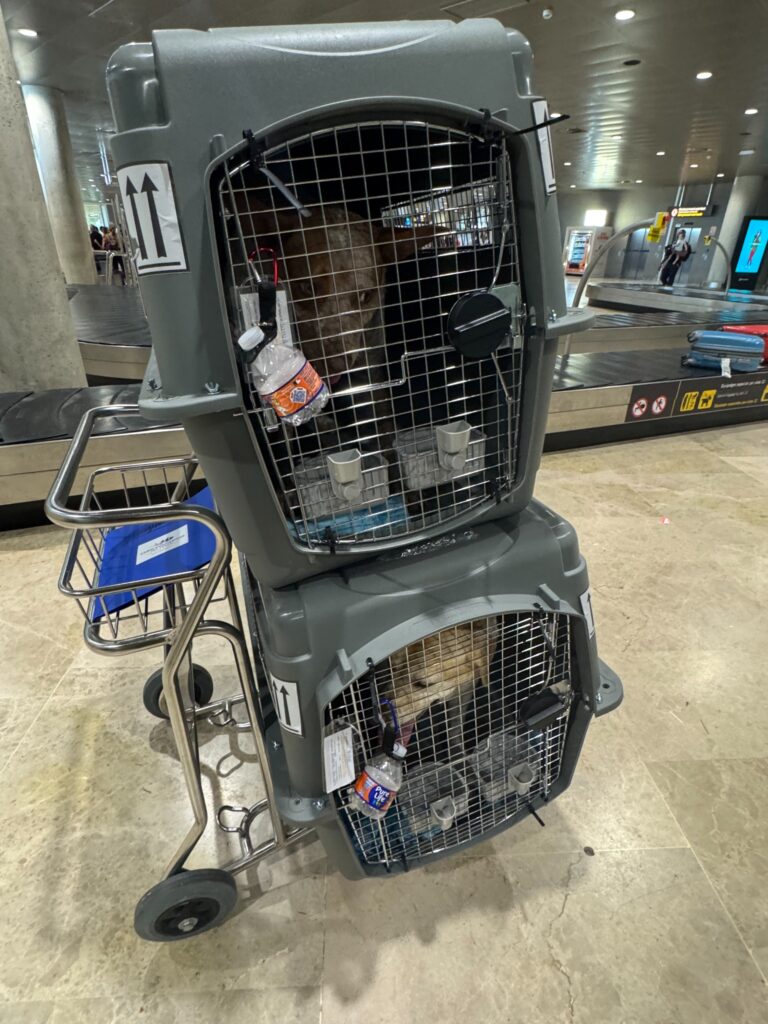
Is the Cargo Hold Temperature-Controlled During a Ground Stop?
A designated live-animal compartment is designed to provide an appropriate environment for animals during flight.
However, it would be misleading to say that the hold automatically maintains the same temperature as the passenger cabin at every moment on the ground.
An aircraft's heating, cooling, and ventilation arrangements can depend on its systems and the ground equipment available while it's parked. The requirements and procedures can also vary by airline and aircraft.
This is why airlines have special procedures for transporting live animals and why ground temperatures, aircraft suitability, and weather restrictions matter when accepting pets for travel.
If a prolonged delay creates a concern about an animal's welfare, the airline should evaluate the situation and take appropriate action.
That may mean maintaining suitable environmental conditions, returning to the gate, or arranging for ground personnel to unload the animal when it is safe and operationally possible.
No one should promise that every delay will unfold identically. But airlines do have animal-handling responsibilities, and pet owners are right to ask how those responsibilities will be met.
Does the Pilot Know There's a Pet in the Hold?
This is a question we hear frequently, and we can personally offer some reassurance.
Airlines transporting live animals have procedures for notifying the flight crew about animals loaded aboard the aircraft.
For live-animal cargo shipments, the International Air Transport Association's guidance describes a formal Notification to Captain, commonly called a NOTOC, which communicates information about the animals and their location aboard the aircraft.
Accompanied checked-pet procedures may differ, but airlines also have established processes for communicating the presence of pets traveling in the hold.
That's important because a pet isn't simply another suitcase.
The pilot and airline operations personnel need to be aware of the animal and the conditions required for safe transport.
That doesn't mean the pilot can personally inspect the animal from the cockpit or that ground personnel can immediately access a loaded crate under any circumstances.
But the presence of a live animal is something the airline's operating procedures are designed to account for.
And we have never met a pilot who didn't take this seriously.
What Would We Do During a Ground Stop?
When Cabin Companions accompanies a dog traveling as checked or excess baggage in the aircraft hold, we're on the same flight.
We personally manage the pet's check-in, confirm their acceptance, and remain responsible for coordinating the journey before and after the animal is in the airline's care.
Before we board, we always tell the gate crew that we’re traveling on the same flight as a pet booked as accompanied excess baggage in the aircraft hold. Often times, the flight crew will communicate with the ground crew and confirm the pet is on board and secure. We’re also watching that on an AirTag in real time!
If our aircraft experienced a prolonged ground stop, one of our first priorities would be making sure the flight crew was still aware that an animal was aboard.
We would ask what the airline knew about the delay, whether appropriate environmental conditions were being maintained, and what the plan would be if the aircraft could not depart.
If necessary, we would ask whether ground personnel could safely retrieve the animal or whether alternative arrangements were required.
We can't simply direct airport workers onto the ramp or order a crate unloaded. Those decisions belong to the airline and its operational personnel.
But we can be there to raise the concern, communicate directly and professionally with the crew, and advocate for the pet's welfare.
That's one of the important differences between accompanied excess-baggage travel and a pet moving through a separate manifest-cargo shipment.
With accompanied excess baggage, your pet travels in the aircraft hold while a Cabin Companion travels on the same flight. Manifest cargo is booked and handled separately through the airline's cargo operation, without that same passenger-reservation arrangement. Cabin Companions does not provide unaccompanied manifest-cargo shipping.
We explain these distinctions in much greater detail in our guide, Pet Cargo vs. Excess Baggage: What's the Difference?.
What Happens If the Flight Is Canceled or Your Pet Needs to Stay Overnight?
Sometimes a ground stop or another airline disruption becomes something more complicated than a delayed departure.
Flights may be canceled or diverted. Connections may be missed. A change of aircraft may affect whether an airline can accommodate a pet at all.
We've experienced plenty of unexpected changes during our travels, including overnight delays.
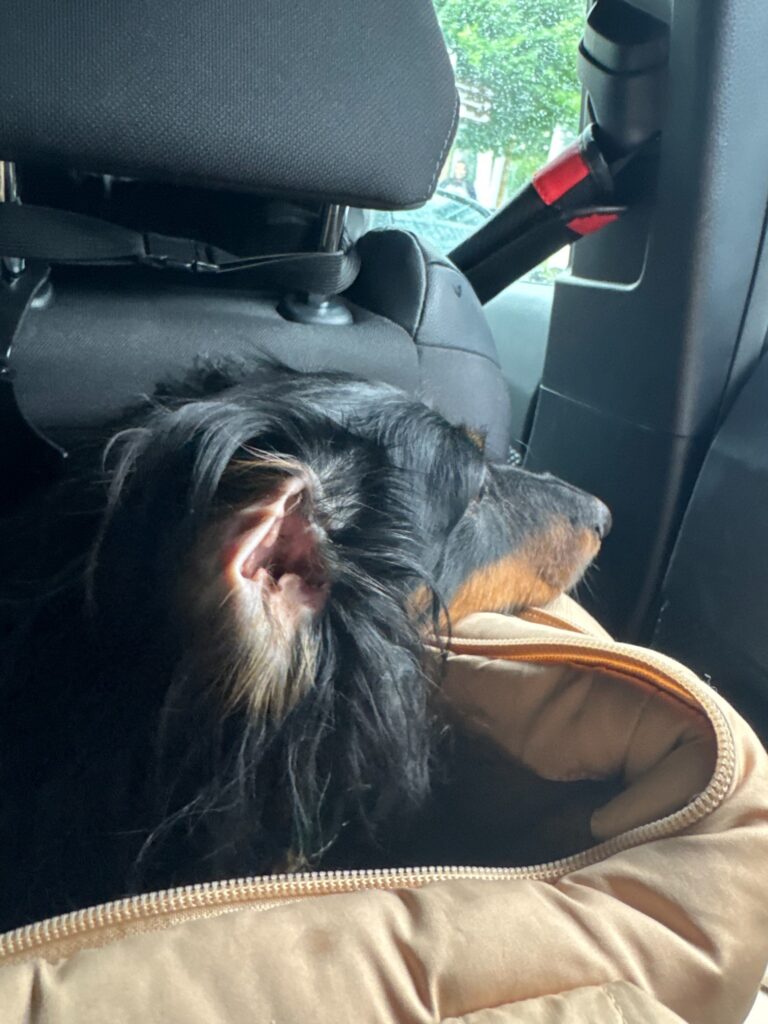
For example, when we accompanied Jeff, a dachshund traveling home from Zürich to Washington, D.C., our scheduled flight was canceled at the last moment. Rather than treating the situation as a crisis, we arranged a pet-friendly hotel, spent the night with him, and continued the journey the following day.
Jeff received the care he needed, and his family didn't have to figure out unfamiliar airline and hotel arrangements from another country.
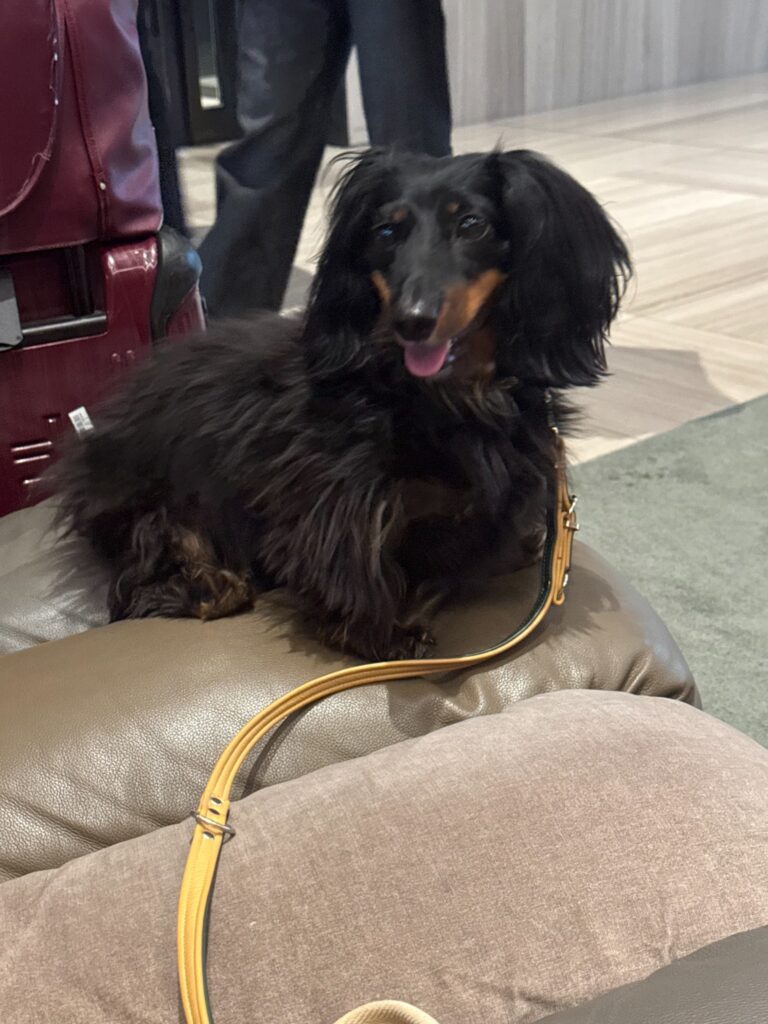
Sometimes the Best Backup Plan Is the One You Make Before You Need It
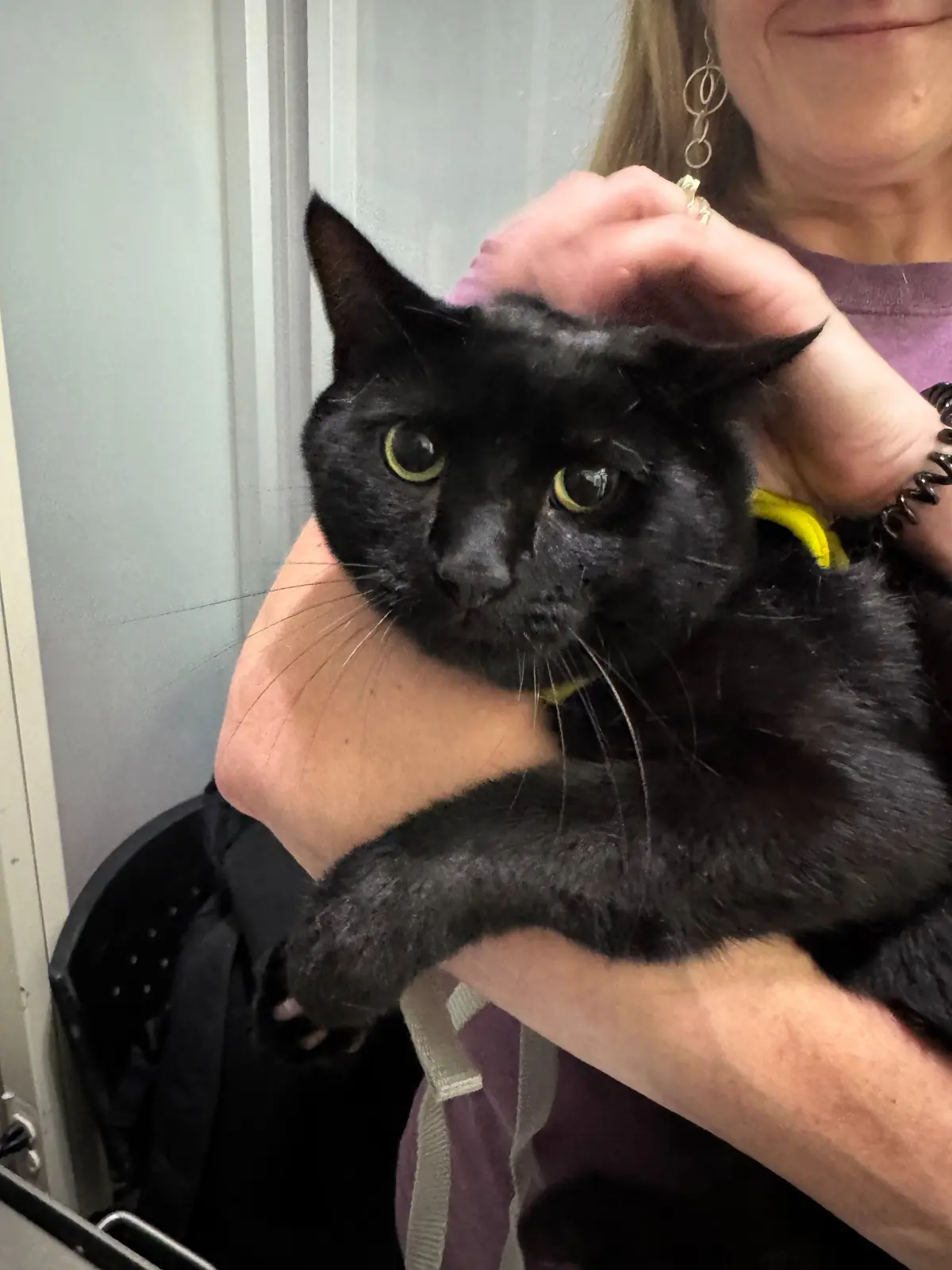
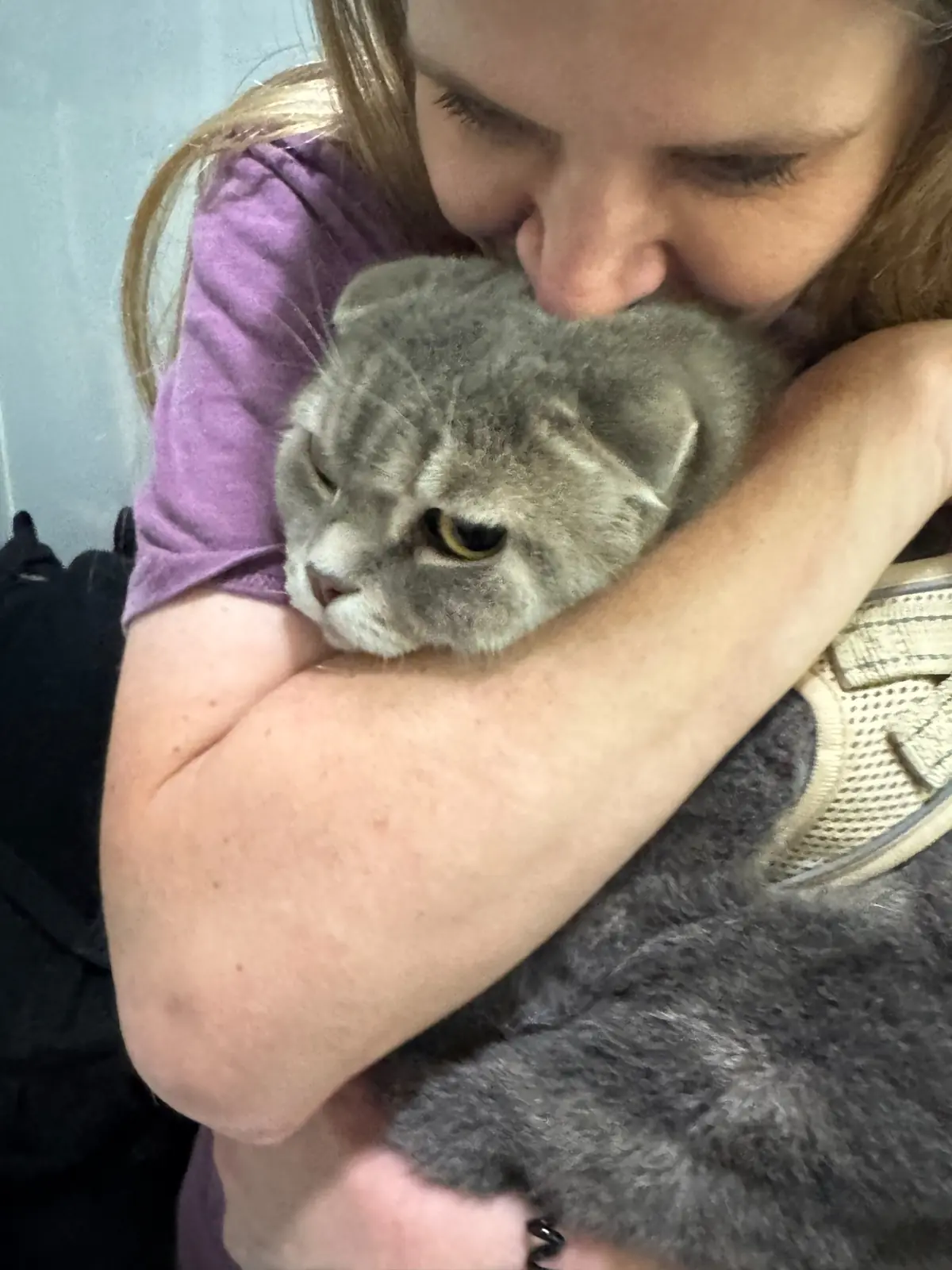
On another journey, we were accompanying two cats, Hammond and Tommy, from Rochester, New York, to their family in Bangkok, Thailand.
Our original itinerary involved a connection in South Korea. But severe weather created the possibility that the flight would be diverted to Japan.
That presented a serious complication.
Japan has strict animal quarantine and transit requirements, and we weren't going to leave to chance how an unexpected diversion would be handled with two cats traveling in the passenger cabin. Would we be allowed to remain aboard? Would we encounter problems continuing the journey? Would the airline have to make different arrangements for the cats?
We couldn't get clear enough answers to feel comfortable taking that risk.
Rather than hope everything would work out, we proactively booked new flights through Istanbul, Turkey, where we could confirm the arrangements for the cats.
The flight we were originally scheduled to take ultimately did divert to Japan.
We can't say exactly what would have happened if we'd remained on that flight. But we didn't have to find out.
Hammond and Tommy stayed with us in the passenger cabin, traveled through Istanbul, and arrived safely in Bangkok, ahead of their original schedule.
That's a perfect example of why international pet travel requires more than knowing how to book an airline reservation.
Sometimes the best way to handle a disruption is to recognize a potential problem and change the plan before it becomes a crisis.
What Can Pet Parents Do to Prepare for a Ground Stop or Major Flight Delay?
You probably can't do much to prevent an FAA ground stop. But you can do quite a bit to prepare for an unexpectedly long travel day.
Here are the things we consider especially important:
- Plan for the entire journey, not just the flight. Include airport time, connections, customs, ground transportation, and the possibility of a significant delay.
- Pack additional supplies. Bring more food, absorbent pads, cleanup materials, and other essentials than the published itinerary alone might suggest.
- Discuss medication contingencies with your veterinarian. If your pet uses travel medication, have written instructions and an adequate supply for delays or extended travel.
- Understand how your pet is traveling. In-cabin, accompanied excess baggage, and manifest cargo involve different levels of accessibility, handling, and responsibility.
- Know the airline's pet policies. Ask what happens if a flight is canceled, an aircraft is changed, or an overnight stay becomes necessary.
- Keep identification and veterinary documents accessible. A disrupted itinerary can create additional questions about reservations and, particularly for international journeys, documentation and entry requirements.
One more thing: if you're traveling with a pet in the aircraft hold, don't be afraid to remind the flight crew that an animal is aboard and ask how a prolonged delay will be handled.
The U.S. Department of Transportation specifically recommends notifying a pilot and flight attendant when an animal is traveling in the hold, even though airlines have their own notification procedures.
That's not being difficult.
It's advocating for your pet.
A Ground Stop Is Beyond Our Control. Preparation Isn't.
There's no way to promise that every trip will go exactly as planned.
We can't control the weather. We can't prevent an FAA computer failure, a communications outage, or a sudden airport closure. And we can't promise that every airline will handle every disruption perfectly.
What we can do is anticipate the complications that come with traveling alongside animals, use the knowledge we've gained from hundreds of thousands of miles of firsthand pet travel, and make sure we're prepared to respond.
That means bringing the right supplies, understanding airline procedures, coordinating veterinary care when needed, communicating with flight crews, and knowing how to manage unexpected changes.
Most importantly, it means taking responsibility for the pets entrusted to us, even when the journey becomes more complicated than anyone expected.
Your pet may not understand why the plane isn't moving. But they should never have to face that uncertainty without someone looking out for them.
That's what we believe professional pet travel should look like.
Traveling With a Cat or Dog?
Whether your pet can travel in the passenger cabin or needs a carefully arranged accompanied journey in the aircraft hold, Cabin Companions provides personally escorted pet transportation with an experienced, accountable companion throughout the trip.
Explore our personally escorted pet travel services or start planning your pet's journey.
